

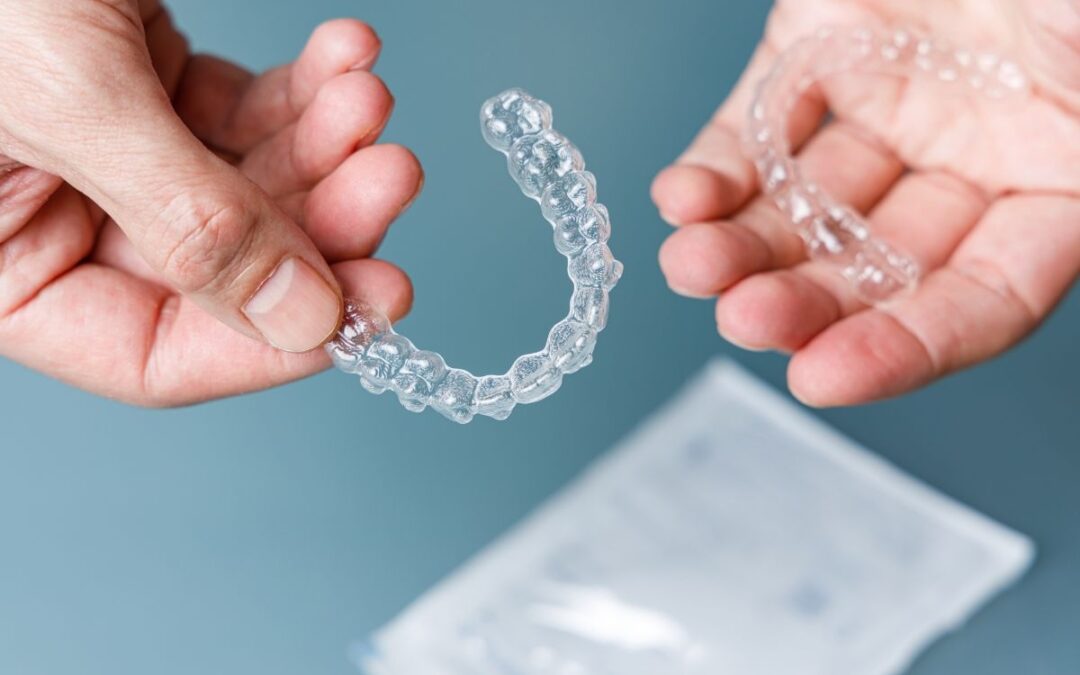
If you’re wondering how do clear aligners work, the basic idea is straightforward: a series of custom-made trays gradually guides your teeth toward planned positions. Rather than moving everything at once, each aligner makes small, controlled adjustments over the course of treatment.
For patients considering clear aligners for teeth straightening in San Antonio, understanding what happens at each stage can make the treatment process feel much less unfamiliar. From your initial orthodontic evaluation to wearing your final retainer, every step has a specific purpose.
Quick Answer: How Do Clear Aligners Work?
Clear aligners work by applying carefully planned pressure to selected teeth. Your orthodontist creates a treatment plan that determines how the teeth should move. You then wear a sequence of custom aligners, with each tray designed to make a small adjustment. As you progress through the series, your teeth gradually move toward their intended positions.
The exact treatment process varies from patient to patient because tooth movement depends on factors such as the type and complexity of the orthodontic problem.
Step 1: Your Orthodontist Evaluates Your Smile
Clear aligner treatment starts with an examination rather than with the aligners themselves.
During an orthodontic evaluation, your provider assesses your teeth, bite, jaw relationship, and overall oral health. Depending on your individual situation, diagnostic records such as photographs, digital scans, or X-rays may be used to understand your starting point.
This evaluation helps determine whether clear aligners are an appropriate option for your orthodontic needs.
Some cases may be better addressed with traditional braces or another orthodontic approach. That’s why an individualized evaluation matters more than simply choosing a treatment based on appearance or convenience.
Step 2: A Customized Treatment Plan Is Created
Once your orthodontist determines that clear aligners may be suitable, a personalized treatment plan is developed.
The plan maps out the desired movement of your teeth and the sequence of changes needed to reach the planned result. Your aligners are then produced to correspond with those stages.
This is an important distinction between clear aligners and generic dental trays. Orthodontic aligners are designed specifically around an individual’s treatment plan.
Step 3: You Receive Your First Set of Aligners
Your first aligner fits over your teeth and begins the initial stage of treatment.
The tray is designed to fit closely against the teeth. When worn as directed, it applies gentle pressure to specific areas, encouraging selected teeth to move.
You may notice pressure or a feeling of tightness when beginning a new aligner. That can happen because the new tray is designed for the next stage of tooth movement. However, significant or persistent discomfort should be discussed with your orthodontic provider.
Step 4: You Progress Through a Series of Trays
One of the key ideas behind how clear aligners work is that treatment uses a sequence of trays rather than a single aligner.
Each tray is slightly different from the previous one. As you move through the series, each aligner works on the next planned stage of tooth positioning.
Think of it as a series of small steps rather than one large movement.
Your orthodontist will provide instructions about when to change aligners and how long to wear them. Following those instructions is an important part of staying on your planned treatment schedule.
Step 5: Consistent Wear Helps Keep Treatment on Track
Because clear aligners are removable, patients have more control over when they take them out than they do with fixed braces.
That flexibility comes with responsibility.
Aligners generally need to be worn for most of the day and night, except when removed according to your orthodontist’s instructions, such as for eating, drinking certain beverages, brushing, and flossing.
Taking aligners out unnecessarily or wearing them less than directed can affect how closely treatment follows the planned sequence.
For that reason, establishing a consistent daily routine can make clear aligner treatment easier to manage.
Step 6: Your Teeth Gradually Change Position
So, how do clear aligners straighten teeth?
The trays apply controlled forces to teeth, and the supporting tissues around the teeth respond to those forces. Over time, this allows teeth to move within the limits of normal orthodontic tooth movement.
Different teeth may move in different ways during treatment. For example, treatment planning may involve correcting crowding, spacing, or aspects of the bite.
Not every orthodontic movement is equally predictable with every treatment method, which is another reason professional treatment planning and monitoring are important.
Step 7: Your Progress Is Monitored
Clear aligner treatment isn’t simply a matter of receiving a box of trays and managing everything independently.
Regular orthodontic monitoring allows your provider to assess progress and determine whether treatment is proceeding as planned. Your treatment plan may also be adjusted when necessary.
The timing and frequency of appointments depend on your individual treatment plan and your orthodontist’s recommendations.
If an aligner no longer fits as expected, a tooth appears not to be tracking with the tray, or you experience an unexpected issue, contact your orthodontic office rather than simply moving ahead without guidance.
How Long Do Clear Aligners Take?
There isn’t one treatment timeline that applies to everyone.
The length of clear aligner treatment can depend on the complexity of the tooth movements needed, your individual treatment plan, how consistently you wear the aligners, and how your teeth respond to treatment.
A relatively straightforward case may require fewer stages than a more complex orthodontic correction.
Rather than relying on a general online estimate, ask your orthodontist what treatment timeline is realistic for your specific situation.
What Can You Eat While Wearing Clear Aligners?
One advantage of removable aligners is that you generally don’t have the same food restrictions associated with fixed orthodontic appliances.
However, aligners should be removed when eating unless your orthodontist gives you different instructions. Before putting them back in, clean your teeth as recommended and make sure the aligners are clean.
Water is generally the simplest choice while wearing aligners. Follow your orthodontist’s instructions regarding other beverages.
Good oral hygiene remains important throughout treatment because the aligners sit closely against the teeth for much of the day.
Are Clear Aligners Right for Everyone?
Clear aligners can be an effective orthodontic option for many patients, but they aren’t automatically the right choice for every person or every orthodontic problem.
Treatment suitability depends on factors such as the type of tooth movement required, bite characteristics, oral health, and other individual considerations.
If you’re wondering whether clear aligners can fix an overbite, the answer depends on the type and severity of the bite issue and the specific tooth movements required. An orthodontic evaluation can help determine whether clear aligners are an appropriate option.
For San Antonio patients considering orthodontic treatment, discussing your goals and concerns with an orthodontic professional can help you understand the available options without committing to a treatment method based solely on its appearance.
What Happens After the Last Aligner?
Finishing the final active aligner does not necessarily mean treatment is completely finished.
Teeth can shift after orthodontic treatment, which is why retention is an important part of maintaining the position achieved during treatment. Your orthodontist may recommend a retainer and provide instructions for wearing it.
Think of the retainer phase as maintenance for your newly positioned smile.
Following your orthodontist’s retention instructions can help protect the progress made during active treatment.
Common Questions About Clear Aligners
Can clear aligners fix crowded teeth?
Clear aligners can address certain types and degrees of dental crowding. Whether they are appropriate depends on the severity and characteristics of the crowding and the movements required.
Do clear aligners hurt?
You may experience pressure, tightness, or temporary discomfort when beginning a new aligner because the tray is designed to move the teeth. Significant or persistent pain should be brought to your orthodontist’s attention.
Can I remove clear aligners?
Yes. One of the defining features of clear aligners is that they are removable. However, they should be removed and worn according to your orthodontist’s specific instructions so treatment stays on track.
How often do I change my aligners?
The schedule varies by treatment plan. Your orthodontist will tell you when to move from one tray to the next rather than relying on a universal schedule.
What happens if an aligner doesn’t fit?
Don’t force an aligner into place or automatically move to the next tray without guidance. Contact your orthodontic office so your provider can determine the appropriate next step.
Choosing Clear Aligners in San Antonio
Understanding how do clear aligners work is a useful first step, but knowing whether they are appropriate for your smile requires an individualized evaluation.
At Oliver Family Orthodontics, patients in San Antonio can discuss their orthodontic concerns, treatment goals, and available options with an orthodontic provider. A consultation can help you understand what clear aligner treatment may involve, including expected steps, responsibilities, and the factors that can influence your treatment timeline.
You can also see patient reviews on Google when researching local orthodontic care and deciding which offices you would like to explore.
Conclusion
Clear aligners straighten teeth through a carefully planned sequence of small movements. Custom trays apply controlled pressure, each aligner advances the treatment plan, and regular orthodontic monitoring helps ensure your progress is evaluated along the way.
The most important part is that clear aligner treatment is individualized. If you’re considering treatment in San Antonio, an orthodontic consultation can help determine whether aligners fit your needs and explain what your specific treatment process could look like.